 JOSEN
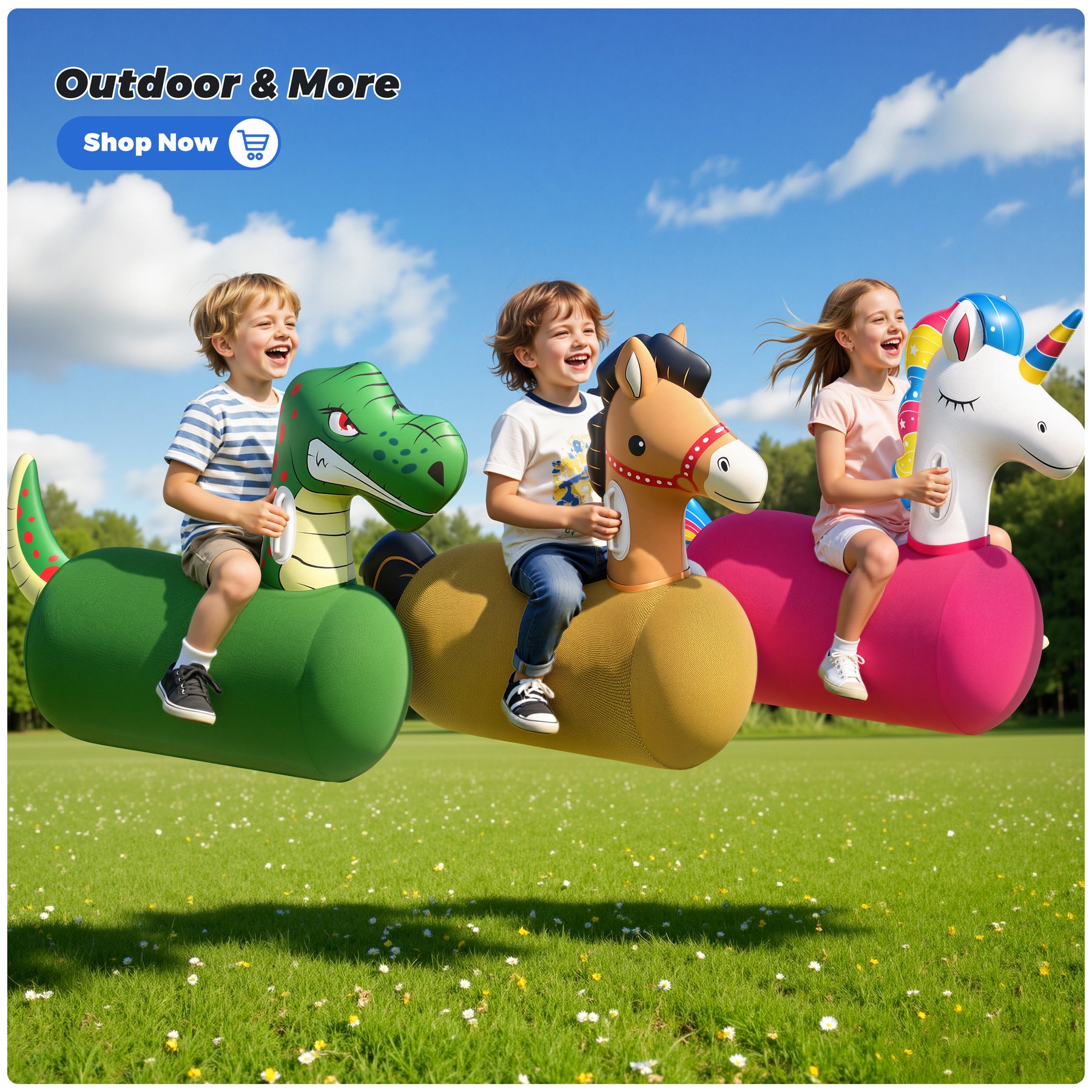
Hoppers are the dry-land half of what we do, and the engineering is closer to a river tube than to a balloon. A ride-on that holds a bouncing child has to keep its shape under a shifting load, so the body is moulded thick through the base, the handles are part of the shell rather than welded on, and the seam runs where a child is least likely to land on it.
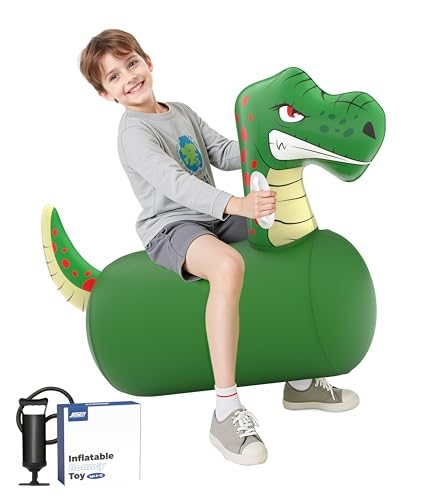
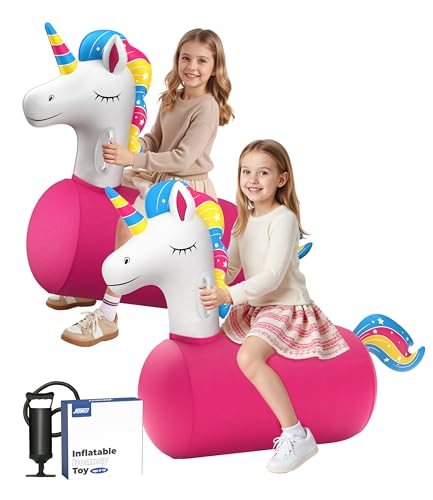
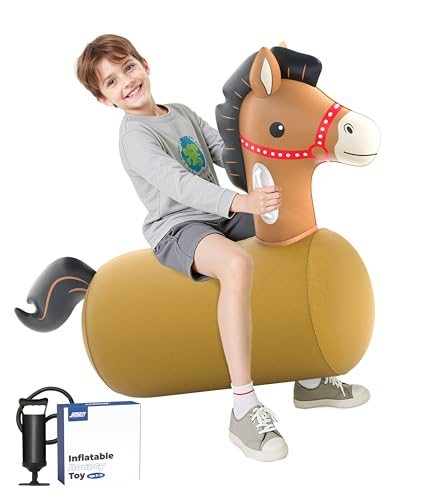
There are three in the line — a dinosaur, a unicorn and a horse — and they differ mostly in size. The horse is the smallest and suits a toddler who is still learning the rhythm. The dinosaur is the middle, the one most families end up with. The unicorn is the big one, tall enough that an older child does not outgrow it in a season, and the one that gets picked for a birthday.
All three ship with a hand pump, which matters more than it sounds. An electric pump overfills a hopper fast, and an overfilled hopper is hard and skittish instead of springy. The hand pump gives you the feel of it — firm, with a little give when you press the back.
They live indoors comfortably. The surface is matte rather than glossy so it does not slide on hardwood, and the shape is low enough to clear most doorframes without deflating. In summer they go out on the grass. In February they are the reason the living room survives a rainy weekend.
Buying a hopper is mostly a question of leg length, and our sizing guide gives the measurements rather than an age range, because children of the same age differ by half a foot. All three take a pump, all three survive a carpet, and all three work as a party present for a child whose interests you do not know. That is a rarer experience than it ought to be in a toy aisle.