 JOSEN
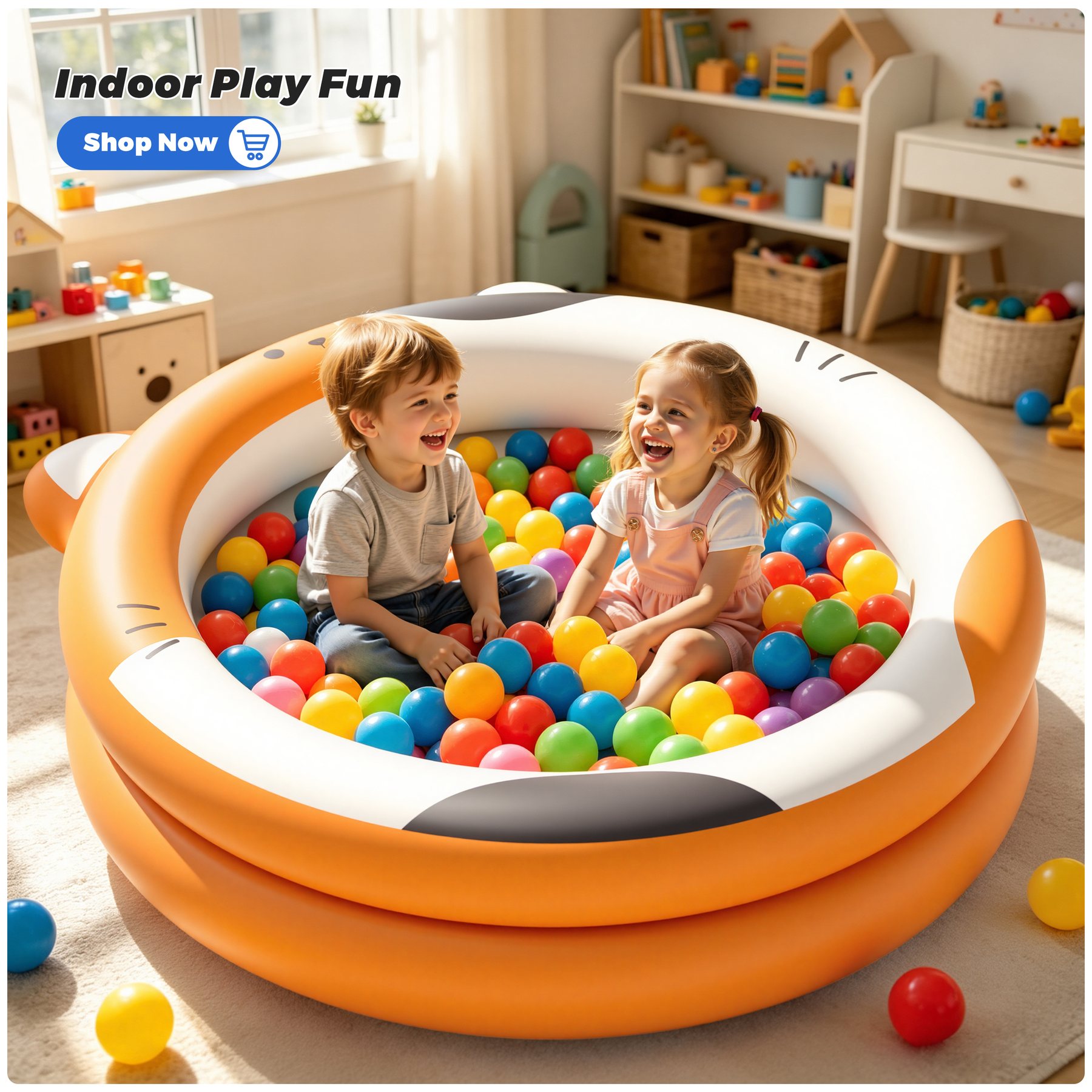
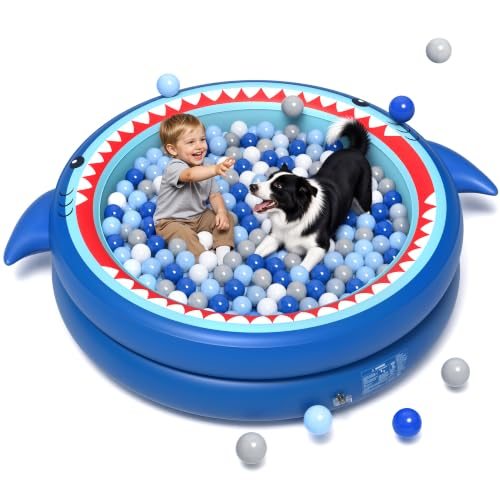
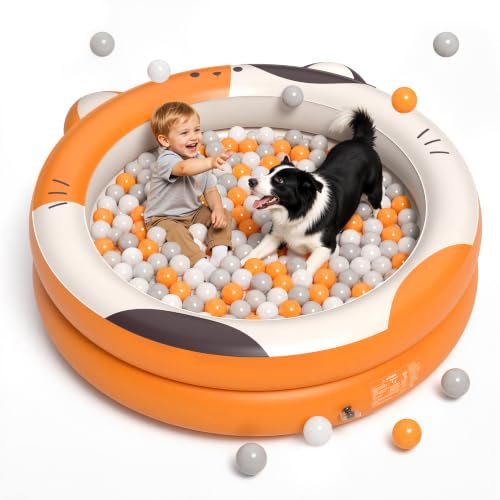
Ball pits are the pieces we are most careful with, because the people using them cannot read a warning label. The walls are inflated rings rather than frames, so there is nothing hard to fall against. The floor is a separate inflated layer, which is the part a lot of cheap pits skip — it keeps a crawling child off cold tile and takes the sting out of a sit-down landing.
The two round pits measure 52 inches across and come in a shark design and a plain orange. Both ship with a pump and both deflate to something you can carry under one arm. We sell them without balls on purpose: ball counts vary by what a family already has, and shipping a thousand plastic balls across the country to a house that owns three hundred is a strange thing to do.
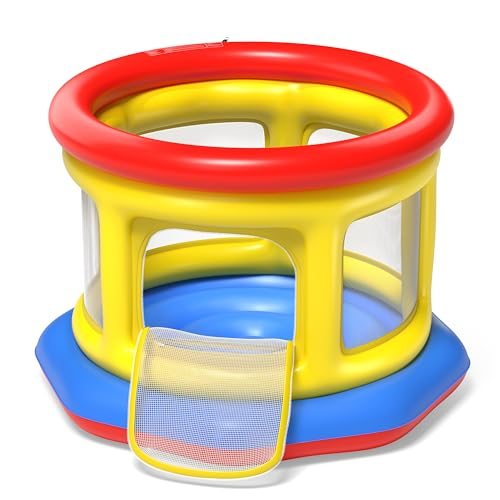
The bounce house is the bigger piece — a combined trampoline floor and ball pit sized for ages one to three, low enough that a parent can reach in from outside and small enough to fit a standard living room. It is not a party rental in miniature. It is a daily-use thing, and we built the floor seams for a toddler who will use it every day for two years.
All three inflate in under three minutes and hold air for weeks at a time. Check the valves once a month, top up when the walls feel soft, and keep them off gravel. That is the entire maintenance schedule.
If you are furnishing a first playroom, the practical experience is this: the pit goes in a corner and stays, the bounce house comes out for a party and goes back in the cupboard afterwards. Our guide to picking a first inflatable covers ages, ball counts and the floor space each one genuinely needs, which is always a little more than the box suggests.